NewsUS Air Force satisfied with geopolymer developments29 May 2006Report from the Air Force Research Laboratory on geopolymer research and developments report project number 9. AFRL...
NewsFly Ash based Geopolymer Concrete : 2 new reports from Curtin26 Apr 2006The geopolymer group at Curtin University of Technology, Perth, Australia (Prof. V. Rangan) has released 2 new reports...
Technical papers#18: Fly ash-based geopolymer concrete26 Apr 2006Fly Ash-Based Geopolymer Concrete for environmental protection by B.Vijaya Rangan Faculty of Engineering, Curtin...
ConferencesGeopolymer Conference in Thailand, 24-25 May 200625 Apr 2006The International Conference on Pozzolan, Concrete and Geopolymer, is organized by Khon Kaen University,...
PyramidsPyramids (2) The evidencesEditor10 Apr 2006Are Pyramids Made Out of Concrete? Pyramids (1) Are Pyramids Made Out of Concrete? Pyramids (2) The...
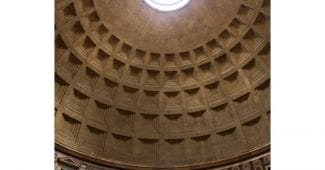
Roman cementHigh performance Roman cement and concrete, high durable buildings8 Apr 2006The Coliseo, Rome, 2nd C. AD (left) The Pantheon, Rome, 2nd C. AD, inside (center) The Pantheon, Rome, 2nd C. AD,...
ApplicationsGEO-STRUCTURE: repair and retrofit buildings with fibers7 Apr 2006External repair and structural retrofit for aging infrastructure and aging buildings Infrastructure in the United...
ApplicationsGeopolymer cement and Geopolymer Concrete7 Apr 2006Watch the FREE webinar (duration 2 hours 15 min.) covering various aspects of the geopolymer science with real...
ApplicationsHazardous and radioactive waste encapsulation treatment7 Apr 2006GEOPOLYTECH: Toxic and Radioactive Waste Management The patented GEOPOLYTECH technology is based on the use of...
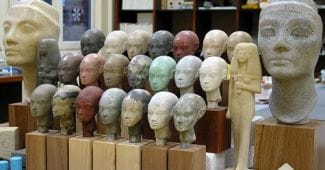
ApplicationsPotential utilizations in Art and Decoration7 Apr 2006Georges Grimal, a French sculptor and painter, stated: Lighting has tremendous importance in sculpture. I call...
FAQPyramid: Cement and Concrete expert agrees!6 Apr 2006My name is Prof. Mario Collepardi and I am a professor of "Materials Science and Technology" at the Politecnico of...
ScienceTechnical Data Sheet5 Apr 2006Technical Data Sheet for Geopolymeric cement type (Potassium, Calcium) – Poly(sialate-siloxo) / (K,Ca) –...
Featured articlesInnovation and further researches5 Apr 2006Prof. Joseph Davidovits presents the road map for the next couple of years on geopolymer science innovation and...
Technical papers#17: Develoment and properties of low-calcium fly ash-based geopolymer concrete4 Apr 2006Curtin Research Report on Fly Ash-Based Geopolymer Concrete Develoment and properties of low-calcium fly ash-based...
Technical papers#16: Environmentally Driven Geopolymer Cement Applications4 Apr 2006Environmentally Driven Geopolymer Cement Applications. by Joseph Davidovits Invited Paper, Geopolymer 2002...
Technical papers#10: From ancient concretes to Geopolymers4 Apr 2006Arts et Métiers Magazine N°180, Sept. 1993: From ancient concretes to geopolymer “Des bétons antiques au...
Technical papers#8: Alkaline Cements and Concretes, Properties of Geopolymer cements4 Apr 20061rst International Conference on Alkaline Cements and Concretes KIEV Ukraine, 1994 PROPERTIES OF GEOPOLYMER...
Technical papers#7: Concretes for Nuclear Waste and Uranium Waste Containment4 Apr 2006Recent Progresses in Concretes for Nuclear Waste and Uranium Waste Containment by Joseph Davidovits published in...
Technical papers#2: Reinforced Concrete Beams4 Apr 2006Geopolymer-Carbon Composite for Repair and Rehabilitation of Reinforced Concrete Beams by P. Balaguru, Stephen...
Archaeological papers#E: Searching for Carbunculus (“A la recherche du Carbunculus”)4 Apr 2006A la recherche du Carbunculus (searching for Carbunculus) by Frédéric Davidovits, Université de Caen published in...
Archaeological papers#D: The synthetic pozzolanic mortar by Vitruvius4 Apr 2006Les mortiers de pouzzolanes artificielles chez Vitruve: évolution historique et archirtecturale DEA thesis by...
LibraryRecent Literature in Geopolymer Science and Technology30 Mar 2006Updated list of publications from the Geopolymer Research Group, Wellington, New Zealand, MacKenzie et al....
NewsResearch Report on Fly Ash Based Geopolymer Concrete28 Jan 2006The Geopolymer Group at Curtin University of Technology, Australia, Prof. Vijay Rangan, has released his Research...
NewsGeopolymer Seminar in Portugal, Nov. 19-20, 200428 Sep 2004The Portuguese geopolymer group at UNIVERSIDADE DE TRÁS-OS-MONTES E ALTO DOURO, VILA REAL, north of Portugal, Prof....
NewsState of the Art paper on Fly Ash Geopolymer Concrete28 Sep 2004The Geopolymer Group at Curtin University of Technology, Australia, Prof. Vijay Rangan, has released a new paper for...
NewsNew Papers to Download from J. Davidovits10 Jan 2004We have added 3 important papers in the Library : the two keynote papers presented by Prof. Joseph Davidovits at the...
NewsGeopolymer at Curtin University of Technology19 Jun 2003Professor Vijay RANGAN sent the following message from the Curtin University of Technology, Perth, Australia: subject:...