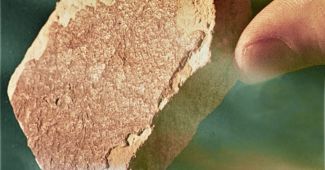
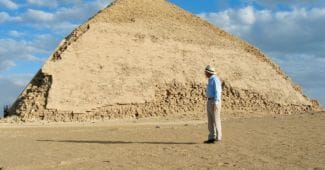
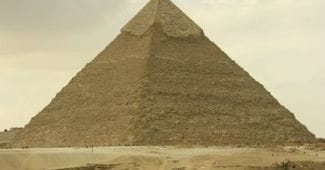
Geopolymer and ArchaeologyDistribution of sodium and chlorine in samples of Egyptian pyramidsEditor18 Nov 2020Journal on Geopolymer Science Applied to Archaeology 2020, Vol. 1, p. 1-9 By Guy Demortier, Emeritus...
PyramidsDeep Misleading Publications by GeologistsEditor18 May 2020Are Pyramids Made Out of Concrete? Pyramids (1) Are Pyramids Made Out of Concrete? Pyramids (2) The...
FAQFAQ for artificial stone supportersEditor3 Aug 2016Pyramids (1) Are Pyramids Made Out of Concrete? Pyramids (2) The evidences Pyramids (3) The formula, the invention...
VideoWebinars Videos Collection5 May 2015Webinar Spring 2016 This free webinar covers various aspects of the geopolymer science and applications....
Archaeological papers#I: Chapter 1 of the Pyramids book25 Apr 2015Chapter 1 of the book Why the pharaohs built the Pyramids with fake stones FREE download of Chapter 1 of the book...
Video[video] Webinar Spring 2014: Geopolymer Web Workshop, Apr. 8-924 Mar 2014 Recorded Videos of the Free Geopolymer Webinar Spring 2014: Talk 1 and Talk 2, April 8-9,...
PyramidsPaleomagnetism study supports Pyramid geopolymer stoneEditor18 Jan 2013Since the beginning of his research, many "experts" suggested to J. Davidovits to carry out paleomagnetism studies....
NewsPossible forgery on antic egyptian stele2 Aug 2010Professor Joseph Davidovits has discovered a possible falsification of hieroglyphic signs on a well-known 3200 year...
NewsAfter the Pyramids?3 Oct 2009If you want to know how the knowledge evolved after the Egyptian Pyramids click on Colosses of...
FAQAfter the Pyramids ?2 Oct 2009If you want to know how the knowledge evolved after the Pyramids click on Colosses of...
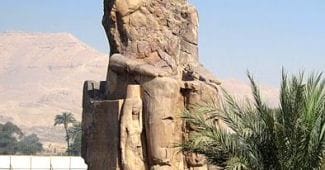
CivilizationColosses of Memnon, masterpiece by Amenophis Son of Hapu18 Sep 2009In Egypt, the return of agglomerated (geopolymer) stone 1300 years after the Great Pyramids, under Amenhotep III and...
Tutorial / bookBook: Why the pharaohs built the Pyramids with fake stones12 May 2008By Joseph Davidovits 30 years after the best seller book: The Pyramids: an enigma solved, after 30 years of new...
PyramidsBook: Why the pharaohs built the Pyramids with fake stonesEditor12 May 2008By Joseph Davidovits 30 years after the best seller book: The Pyramids: an enigma solved, after 30 years of new...
NewsMIT supports Davidovits’ Pyramid theory23 Apr 2008The famous Massachusetts Institute of Technology, Boston, USA, is supporting Prof. Davidovits' re-agglomerated stone...
NewsNATURE report on pyramid limestone concrete15 Dec 2006The scientific magazine NATURE, vol. 444, 793 (14 december 2006) writes in his News about the recent analysis on...
NewsCutting-Edge analysis proves Davidovits’ Pyramid theory1 Dec 2006On November 30, the Journal of the American Ceramic Society has released a very important scientific research carried...
PyramidsAre Pyramids Made Out of Concrete? (1)Editor10 Apr 2006Are Pyramids Made Out of Concrete? Buy your book at Why the pharaohs built the Pyramids with fake stones Pyramids (1)...
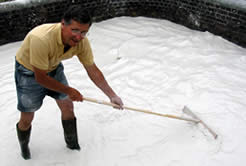
PyramidsPyramids (2) The evidencesEditor10 Apr 2006Are Pyramids Made Out of Concrete? Pyramids (1) Are Pyramids Made Out of Concrete? Pyramids (2) The...
PyramidsPyramids (3) The formula, the invention of stoneEditor10 Apr 2006Are Pyramids Made Out of Concrete? Pyramids (1) Are Pyramids Made Out of Concrete? Pyramids (2) The...
PyramidsPyramids (4) Videos and bookEditor9 Apr 2006Are Pyramids Made Out of Concrete? Pyramids (1) Are Pyramids Made Out of Concrete? Pyramids (2) The...
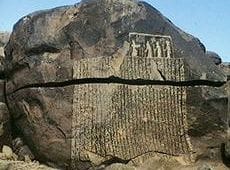
PyramidsThe Famine Stele: hieroglyphs on pyramids construction9 Apr 2006Summary of the Conference by Joseph Davidovits Vth International Congress of Egyptology, Cairo, Egypt, Oct....
CivilizationPapers dedicated to archaeology in Geopolymer Proceedings8 Apr 2006Brief summary of the papers dedicated to archaeology and published in the Geopolymer Proceedings : Geopolymer 2005 and...
FAQPyramid: Cement and Concrete expert agrees!6 Apr 2006My name is Prof. Mario Collepardi and I am a professor of "Materials Science and Technology" at the Politecnico of...
FAQReplicating egyptian stonework6 Apr 2006I recently read your book regarding the construction of the pyramids and was impressed with the overall coherence of...
FAQPyramids: opponents missing the big picture?6 Apr 2006A letter from David Martin about Davidovits’ pyramid theory that illustrates how narrow minded people behaved when...
Archaeological papers#G: Construction des pyramides d’après Hérodote4 Apr 2006IXth Egyptology Congress, Grenoble, 2004 Construction des pyramides d’après Hérodote: Etude lexicologique des...
Archaeological papers#F: Why Djoser’s blue Egyptian faience tiles are not blue?4 Apr 2006IXth Egyptology Congress, Grenoble, 2004 Why Djoser’s blue Egyptian faience tiles are not blue? Manufacturing...
Archaeological papers#B: Famine Stele and the construction of Pyramids with man-made stone4 Apr 2006Vth Egyptology Congress, Cairo, 1988 The Famine Stele and the construction of Pyramids with man-made stone by Joseph...
Archaeological papers#A: X-Ray analysis of Pyramids’ casing stones and their limestone quarries4 Apr 2006by Joseph Davidovits published in Science in Egyptology, Proceedings of the Science in Egyptology Symposia,...
LibraryPapers discussing Davidovits pyramid theory30 Mar 2006Microstructural Evidence of Reconstituted Limestone Blocks in the Great Pyramids of Egypt, Barsoum, M. W.,...