ArchaeologyIntroduction: Why an archaeology section at the Geopolymer Institute?8 Apr 2006When all the logical conjectures have been set aside, the one that remains, as improbable as it may seem, is likely...
ArchaeologyNew Book: Ancient Geopolymers in South America and Easter IslandEditor22 Nov 2024The renowned scientific publisher Springer-Nature has published Prof. J. Davidovits new book entitled: Ancient...
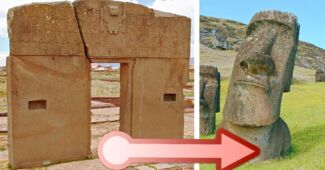
Featured articlesThey came from America to build Easter IslandEditor24 Sep 2021Prof. Joseph Davidovits presents his hypothesis based on scientific data available (as of August 2021), and often...
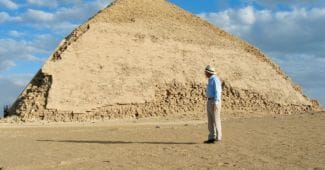
PyramidsDeep Misleading Publications by GeologistsEditor18 May 2020Are Pyramids Made Out of Concrete? Pyramids (1) Are Pyramids Made Out of Concrete? Pyramids (2) The...
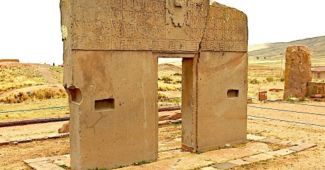
ArchaeologyTiahuanaco Monuments (Tiwanaku / Pumapunku), Bolivia are made of geopolymer artificial stones created 1400 years ago.Editor3 Mar 2019Transcript of the conference by Prof. Joseph Davidovits, held at the Geopolymer Camp 2018, in the Session: Ancient...
FAQFAQ for artificial stone supportersEditor3 Aug 2016Pyramids (1) Are Pyramids Made Out of Concrete? Pyramids (2) The evidences Pyramids (3) The formula, the invention...
PyramidsPaleomagnetism study supports Pyramid geopolymer stoneEditor18 Jan 2013Since the beginning of his research, many "experts" suggested to J. Davidovits to carry out paleomagnetism studies....
PyramidsArtificial Pyramid Stone: new analysis14 Jul 2011A new scientific analysis demonstrates the artificial nature of Egyptian Pyramid stone. The article titled: "Were the...
CivilizationColosses of Memnon, masterpiece by Amenophis Son of Hapu18 Sep 2009In Egypt, the return of agglomerated (geopolymer) stone 1300 years after the Great Pyramids, under Amenhotep III and...
PyramidsBook: Why the pharaohs built the Pyramids with fake stonesEditor12 May 2008By Joseph Davidovits 30 years after the best seller book: The Pyramids: an enigma solved, after 30 years of new...
CivilizationThe making of brown-black ceramics with LTGS in prehistory and antiquity26 Jun 2006At the 1980, 1981, 1982, and 1984 Symposia on Archaeometry, Joseph Davidovits showed the possibility of fabricating...
PyramidsAre Pyramids Made Out of Concrete? (1)Editor10 Apr 2006Are Pyramids Made Out of Concrete? Buy your book at Why the pharaohs built the Pyramids with fake stones Pyramids (1)...
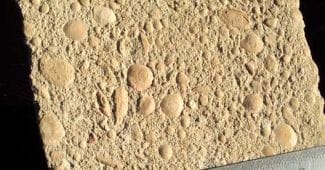
PyramidsPyramids (2) The evidencesEditor10 Apr 2006Are Pyramids Made Out of Concrete? Pyramids (1) Are Pyramids Made Out of Concrete? Pyramids (2) The...
PyramidsPyramids (3) The formula, the invention of stoneEditor10 Apr 2006Are Pyramids Made Out of Concrete? Pyramids (1) Are Pyramids Made Out of Concrete? Pyramids (2) The...
PyramidsPyramids (4) Videos and bookEditor9 Apr 2006Are Pyramids Made Out of Concrete? Pyramids (1) Are Pyramids Made Out of Concrete? Pyramids (2) The...
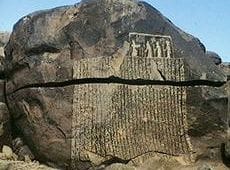
PyramidsThe Famine Stele: hieroglyphs on pyramids construction9 Apr 2006Summary of the Conference by Joseph Davidovits Vth International Congress of Egyptology, Cairo, Egypt, Oct....
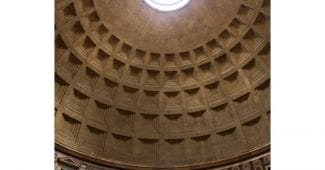
Roman cementHigh performance Roman cement and concrete, high durable buildings8 Apr 2006The Coliseo, Rome, 2nd C. AD (left) The Pantheon, Rome, 2nd C. AD, inside (center) The Pantheon, Rome, 2nd C. AD,...
CivilizationMaking Cements with Plant Extracts8 Apr 2006Fabrication of stone objects, by geopolymeric synthesis, in the pre-incan Huanka civilization (Peru) Joseph...
CivilizationPapers dedicated to archaeology in Geopolymer Proceedings8 Apr 2006Brief summary of the papers dedicated to archaeology and published in the Geopolymer Proceedings : Geopolymer 2005 and...
ArchaeologyThe geopolymer chemistry was known during antiquity8 Apr 2006Joseph Davidovits has found revolutionary ways of producing cements with plants saps, which could explain some of the...