NewsGeopolymer Scientific papers on exponential growth31 Dec 2009The number of scientific papers dealing with geopolymer science & technology is following an exponential growth,...
Tutorial / bookVideo Tutorial: Geopolymer Bundle19 Oct 2008Professor Joseph DAVIDOVITS presents his first course for beginners in geopolymer chemistry and...
NewsTopics for innovation and further researches19 Jun 200814 topics for future innovations and research projects are listed in the Category Science, at Innovation and Future...
Tutorial / bookBook: Geopolymer Chemistry and Applications, 5th ed.Editor22 Feb 2008By Joseph DAVIDOVITS A Practical and Scientific Approach to Sustainable Development 5th Edition ISBN:...
NewsFirst Book on Geopolymers!10 Jan 2008Professor Joseph Davidovits is proud to announce the release of his book entitled: GEOPOLYMER CHEMISTRY AND...
ConferencesGeopolymer Session in 32nd ICACC, Jan. 2008, Florida, USA.9 Jul 2007The 32nd International Conference on Advanced Ceramics and Composites (ICACC) is held each year in Florida. In Jan...
NewsCutting-Edge analysis proves Davidovits’ Pyramid theory1 Dec 2006On November 30, the Journal of the American Ceramic Society has released a very important scientific research carried...
NewsPaper on geopolymer-kalsilite-leucite transformation10 Oct 2006The geopolymer group at ANSTO (Dr. Dan S. Perera), Australian Nuclear Science and Technology Organisation, has released...
Archaeological papers#H: the making of black-brown Etruscan ceramic, LTGS analogue23 Jun 2006Geopolymer ‘99, 2nd Int. Conf. on Geopolymers The making of Etruscan ceramic (Bucchero Nero) in VII-VIII century...
NewsFly ash waste material as a geopolymer feedstock31 May 2006Industrial Research has developed a process which will enable the fly ash waste material from burning coal at the...
NewsEM image of vitrified geopolymer29 May 2006The geopolymer group at University of Illinois, Prof. W. Kriven, participated to the Center for Microanalysis of...
NewsUS Air Force satisfied with geopolymer developments29 May 2006Report from the Air Force Research Laboratory on geopolymer research and developments report project number 9. AFRL...
NewsFly Ash based Geopolymer Concrete : 2 new reports from Curtin26 Apr 2006The geopolymer group at Curtin University of Technology, Perth, Australia (Prof. V. Rangan) has released 2 new reports...
Technical papers#18: Fly ash-based geopolymer concrete26 Apr 2006Fly Ash-Based Geopolymer Concrete for environmental protection by B.Vijaya Rangan Faculty of Engineering, Curtin...
ArchaeologyIntroduction: Why an archaeology section at the Geopolymer Institute?8 Apr 2006When all the logical conjectures have been set aside, the one that remains, as improbable as it may seem, is likely...
ArchaeologyThe geopolymer chemistry was known during antiquity8 Apr 2006Joseph Davidovits has found revolutionary ways of producing cements with plants saps, which could explain some of the...
ScienceScientific means of investigation5 Apr 2006X-rays diffraction spectra of hardened geopolymeric materials (resins and cements) do not supply accurate information...
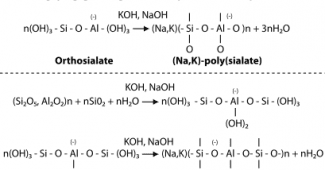
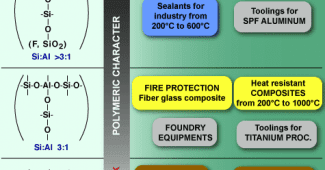
ScienceChemical Structure and Applications5 Apr 2006The atomic ratio Si:Al in the poly(sialate) structure determines the properties and application fields. A low ratio...
Featured articlesInnovation and further researches5 Apr 2006Prof. Joseph Davidovits presents the road map for the next couple of years on geopolymer science innovation and...
Technical papers#17: Develoment and properties of low-calcium fly ash-based geopolymer concrete4 Apr 2006Curtin Research Report on Fly Ash-Based Geopolymer Concrete Develoment and properties of low-calcium fly ash-based...
Technical papers#15: 30 Years of Successes and Failures in Geopolymer Applications4 Apr 200630 Years of Successes and Failures in Geopolymer Applications. Market Trends and Potential Breakthroughs. by...
NewsResearch Report on Fly Ash Based Geopolymer Concrete28 Jan 2006The Geopolymer Group at Curtin University of Technology, Australia, Prof. Vijay Rangan, has released his Research...
NewsGeopolymer session at 107th American Ceramic Society Meeting15 Feb 2005Geopolymer session at the 106th American Ceramic Society National Meeting, Baltimore, USA., April 10-13, 2005. Prof....
NewsState of the Art paper on Fly Ash Geopolymer Concrete28 Sep 2004The Geopolymer Group at Curtin University of Technology, Australia, Prof. Vijay Rangan, has released a new paper for...
NewsGeopolymer Group at Rutgers University, USA23 Sep 2004The Geopolymer Group at Rutgers University, USA, lead by Prof. Balaguru and the collaboration of Dr. R. Lyon from F.A.A...
NewsThe Geopolymer Group at University of Illinois, USA23 Sep 2004The link to the web site for research results and publications of the geopolymer group at University of Illinois,...
NewsNew Mexico State University, USA, Geopolymer Research23 Mar 2004Geopolymers for Thermoelectrical Power are part of the R&D projects presently carried out at New Mexico State...
NewsNew Papers to Download from J. Davidovits10 Jan 2004We have added 3 important papers in the Library : the two keynote papers presented by Prof. Joseph Davidovits at the...
NewsMilestones in the Development of Geopolymer Science and Applications23 Nov 2003To learn how the research development carried out by Prof. Joseph Davidovits' research Group evolved since 1972 and...
NewsNew website on geopolymers from China16 Nov 2003Dear friends, I have created a website related to geopolymer. Some advances on geopolymer that were achieved by our...